
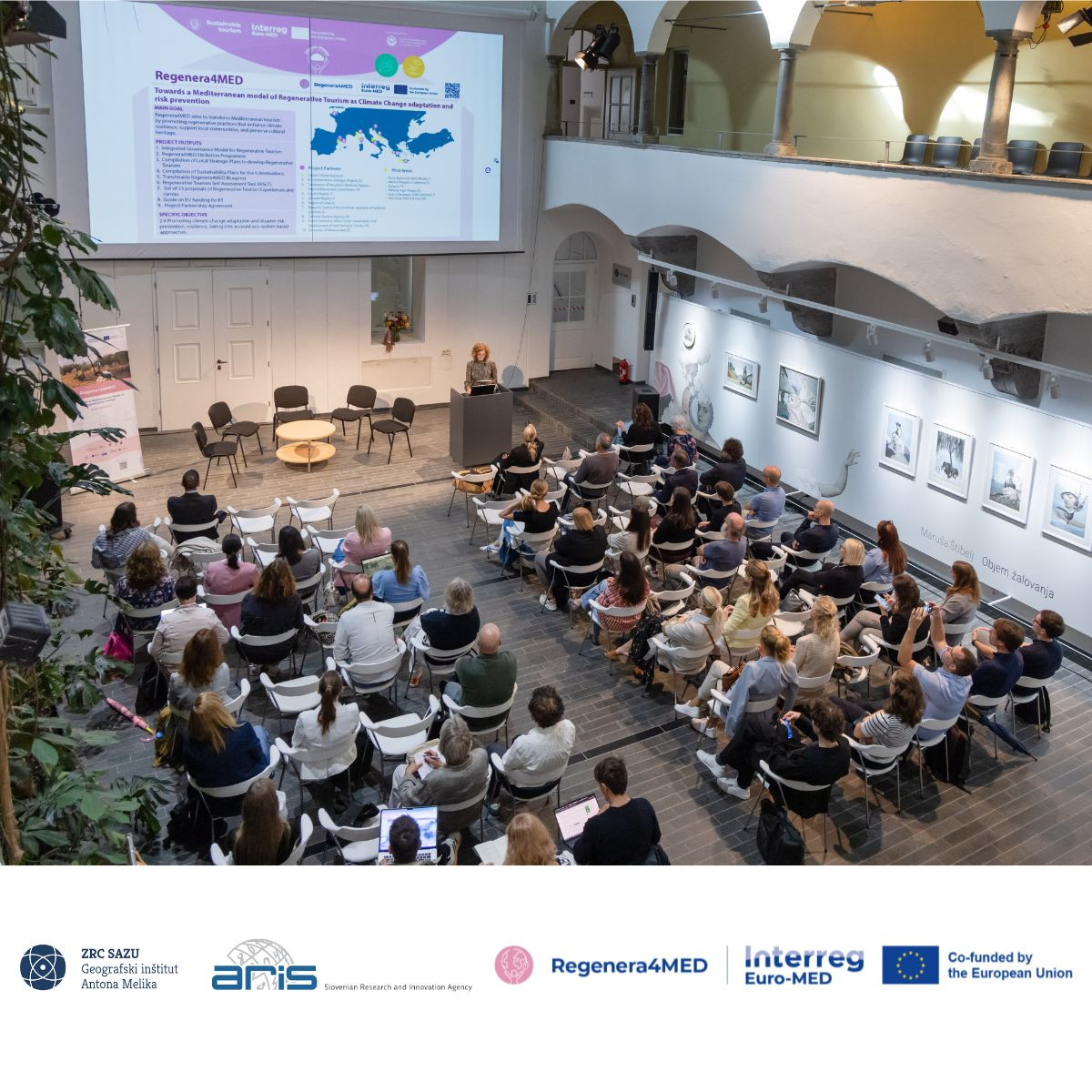
A recipe book without recipes: plenty of ingredients, ideas and inspiration, but no single formula to follow. This is perhaps one way to describe the International Forum “Regenerative Tourism in Practice – Places, Communities and Tourism: From Concept to Practice”, held in Ljubljana on 14 September. More than 70 researchers and representatives from tourism, culture, regenerative agriculture, public institutions and civil society came together to explore how tourism can contribute to the vitality of places and the quality of life of the people who live there. There were plenty of examples to draw from. But there was no single formula to take home.
Different ingredients, different places
In L’Escala, Catalonia, Guenda Dal Cin spoke about tourism seasonality, pressure on the local area and the loss of local skills. The Regenera4MED pilot is exploring how traditional boat-building and repair knowledge can be revived, alongside routes and activities that promote the health and wellbeing of residents.
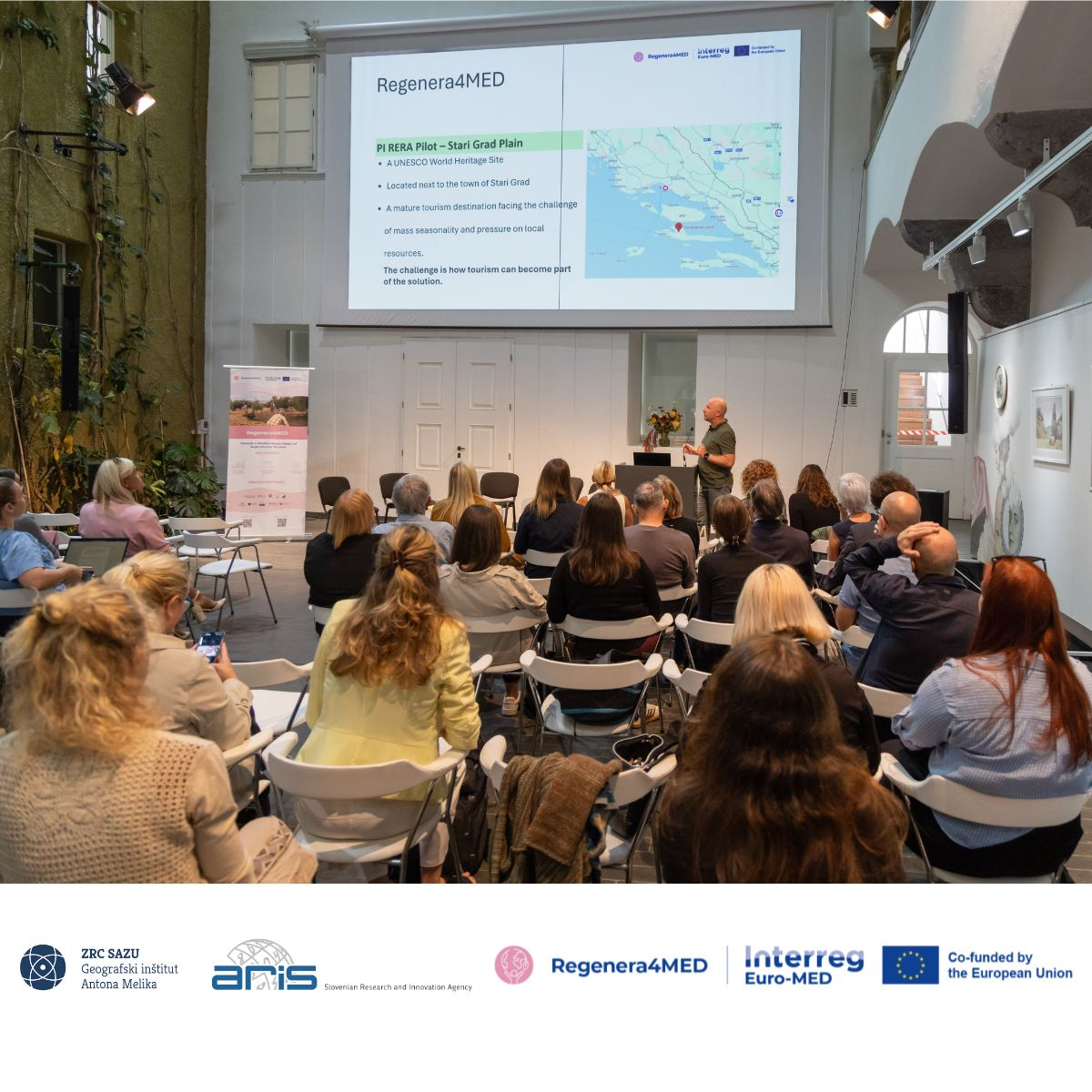
On Hvar, Marjan Dumanić from RERA S.D. Public Institution for Coordination and Development of Split-Dalmatia County presented work bringing tourism closer to local agriculture, food, cultural heritage, biodiversity and the community. The ideas being explored include experiences connected with local food production, regenerative agriculture, medicinal plants, design and music, rooted in the cultural landscape of the area.
In Ljubljana, Aljaž Rudolf presented work developed and tested with Trajna Institute and Krater Creative Laboratory through the international Cooltours initiative. Lučka Berlot from the Museum of Architecture and Design looked at how museums can bring local knowledge, communities, cultural heritage and visitors together. Dr Miha Curk explored the links between regenerative agriculture and tourism, while Marina Ferfolja from the Slovenian Tourist Board brought a national perspective on the future development of tourism. These examples do not form one neat recipe. They come from different places, with different histories, landscapes, people and challenges. That is precisely what made it useful to bring them together.
You can get inspired, but not follow the whole recipe
Regenera4MED has been developing the Guiding Principles for Regenerative Tourism in the Mediterranean as a shared basis for discussion, while keeping local realities at the centre. The Regenerative Tourism Journey gives different actors a way to reflect on their own perspectives. The Blueprint, integrated governance model and training programme take the work further into practice. But a common approach does not mean that every place should end up doing the same thing.
An idea from L’Escala might not work on Hvar. Something being explored in Ljubljana may have little relevance in another destination. What these examples have in common, however, is that they start by understanding the place: its needs, its challenges, its resources and the people who shape it. Hearing about how another place has approached its own reality can still be useful. It can raise a question, suggest a new possibility or offer inspiration for a response that fits a different context.
This is where meeting other places matters. The Ljubljana Forum brought together people approaching tourism from different fields and perspectives. The conversation moved between tourism, agriculture, culture, research, public policy and local communities. The aim was not to reproduce another place’s solution, but to understand what was behind it and consider what might be relevant elsewhere.
Taking something home
Sharing ideas is only the beginning. The bigger question is how tourism can contribute to the long-term vitality of places, and what this can look like in different contexts. Some approaches belong to the place where they were developed. Others may inspire something quite different somewhere else. A traditional boat-building practice might lead another community to look again at its own disappearing skills. A connection between tourism and agriculture might prompt another destination to rethink how local food is part of its visitor offer. A museum project might open a new conversation about who holds local knowledge and how it is shared.
The six Regenera4MED pilot areas in Catalonia, Liguria, Abruzzo, Crete, Corsica and Split-Dalmatia are each starting from their own reality and exploring how regenerative tourism can take shape in their territory. Their experiences will add another perspective to the conversation: what happens when regenerative ideas meet real places, people and local challenges. The Ljubljana Forum offered one opportunity to bring these different experiences and perspectives together. The next part of the work will happen in the pilot areas themselves.
There may never be one recipe for regenerative tourism. What matters is creating spaces where people can learn from one another, build connections and explore how tourism can contribute to the long-term vitality of their places.